Retrieval-Augmented Generation (RAG)
Learn about Retrieval-Augmented Generation (RAG), a practical approach to enhance AI applications with external knowledge bases. Explore how RAG helps create more accurate AI systems by combining language models with real-world data. Find practical guides, implementation examples, and best practices for building RAG systems. Ideal for developers and teams working on AI applications who want to improve their models' accuracy and reliability
Latest Article

More Articles

RAGFlow 1.0 Tutorial: Setup, PDF Parsing and Real Test Results
RAGFlow 1.0 installed with Docker and tested on a 147-page PDF: setup, OpenAI models, DeepDoc vs. a vision LLM parser, RAM usage and answer accuracy.
Azure AI Search RAG Tutorial: Build RAG on Azure with Python
RAG on Azure, tested: index a 144-page PDF with Azure AI Search, run hybrid search with semantic ranker and answer with citations in Python. With costs.

Crawl4AI Docker Tutorial: Crawl Websites for LLMs via REST API
Build and run Crawl4AI in Docker, crawl pages via its REST API to get markdown, metadata and links, and extract data with an LLM through LiteLLM.

Late Chunking: Improving RAG Performance with Context-Aware Embeddings
Late chunking embeds the whole document first, then pools token embeddings into chunks. Python code with jina-embeddings-v3 and a similarity comparison.
What is LibreChat? Features, setup and Open WebUI comparison
LibreChat is an open-source, self-hosted ChatGPT alternative. We installed v0.8.8 with Docker and tested agents, MCP, file search, artifacts and web search.

How to crawl websites for LLMs - using Firecrawl
Firecrawl turns websites into LLM-ready markdown. Python examples for scraping, crawling, Pydantic-based extraction, LangChain and self-hosting with Docker.

RAG, Embeddings and Vector Search with Google BigQuery
Store embeddings in BigQuery, create them with ML.GENERATE_EMBEDDING, query them with VECTOR_SEARCH and run a full RAG pipeline with Gemini in one SQL query.

Document Extraction with GPT-4o: Parse PDF, Word and Excel Files
Parse PDF, Word and Excel files with GPT-4o vision: render each page as an image, extract the text in Python, for about 0.32 to 0.62 cents per page.

How to classify, describe and analyze images using GPT-4o vision
Python examples for sending images to GPT-4o via the OpenAI API to classify, describe and analyze them, plus detail modes and per-image costs.
Open WebUI: What It Is, How to Install It and What It Costs
Open WebUI is a free, self-hosted ChatGPT-style interface. We installed v0.13.0, tested RAG, MCP and web search, and explain the license and pricing.

What is the VertexAI model garden - a practical example: Deploying Llama 3.1 and Claude 3.5 Sonnet
What Vertex AI Model Garden is and how to use it: Claude 3.5 Sonnet and Llama 3.1 as pay-per-use API services, CLIP on a VM, and Hugging Face models.

Fine-tune OpenAI's GPT-4o mini LLM AI model
Fine-tune GPT-4o mini in the OpenAI dashboard: the JSONL training format, how many examples you need, job settings, costs and calling the model from Python.
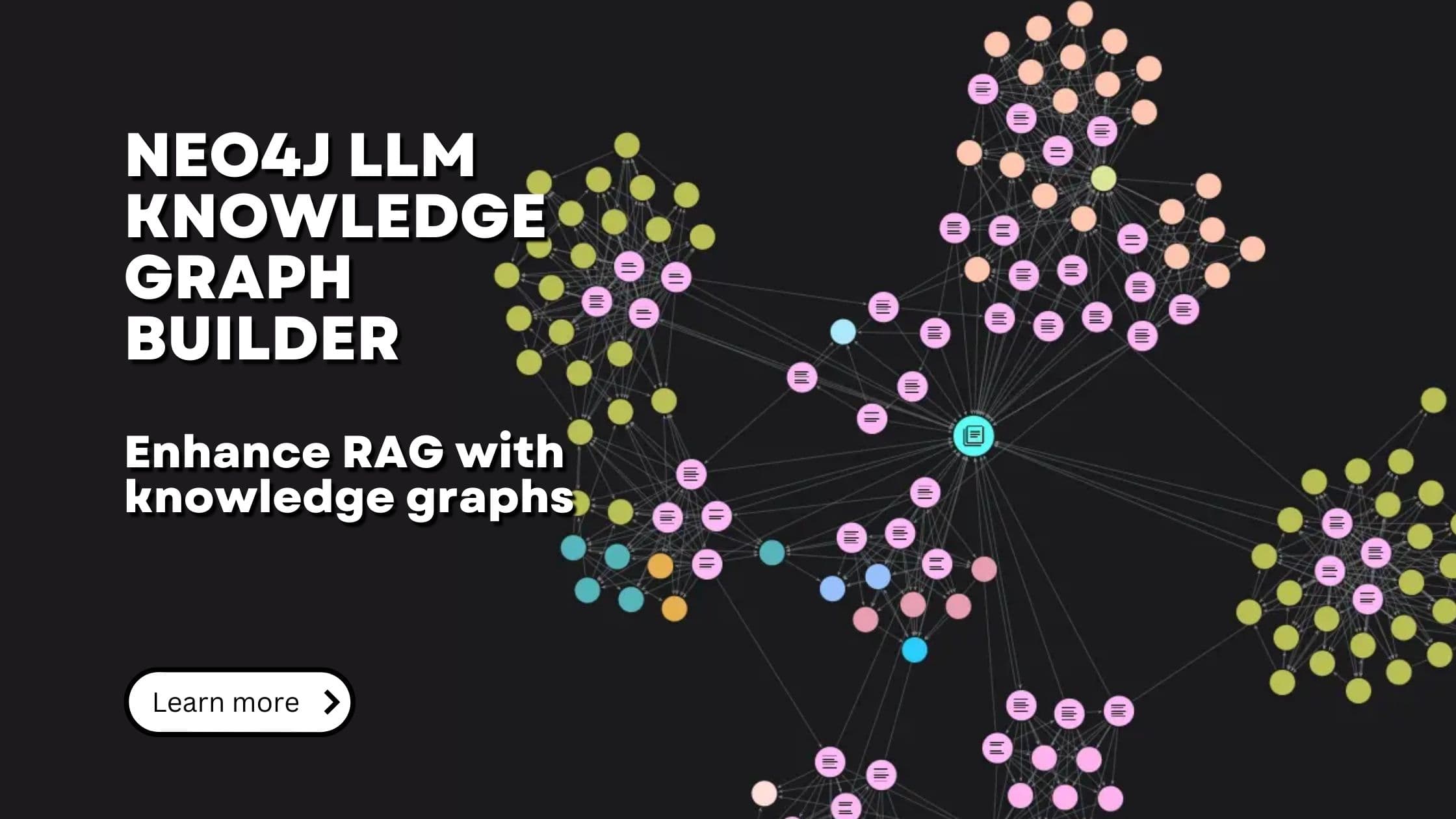
Neo4j LLM Knowledge Graph Builder: How to Create Knowledge Graphs for RAG
Set up the Neo4j LLM Knowledge Graph Builder on AuraDB or Docker, turn a web page into a knowledge graph and query it with GraphRAG in the built-in chat.

BigQuery Text-to-SQL: Query Your Database in Natural Language
Build a text-to-SQL agent for BigQuery in Python: GPT-4o writes the SQL, errors are fed back for self-correction, and RAG picks relevant columns.

LLM Document Extraction: Pull Structured Data from Complex PDFs
Extract text and tables from complex PDFs with an open-source vision LLM: render each page as an image and prompt MiniCPM-Llama3-V 2.5. Python code included.

How to use AI to create a PowerPoint presentation?
Let GPT-4 write python-pptx code that builds a PowerPoint deck from your company documents via RAG, using your own corporate template.

Vertex AI Agent Builder: What It Is, with a Slack Search Example
What Vertex AI Agent Builder is and what Google calls it today, with a no-code example: index Slack messages and build a Gemini search app.

Chat with your Confluence: A Step-by-Step Guide using Airbyte, Langchain and PGVector
Build a Confluence chatbot in Python: load pages with PyAirbyte and LangChain's AirbyteLoader, store embeddings in PGVector, answer with GPT-4 Turbo.

Advanced RAG: Improving Retrieval-Augmented Generation with Hypothetical Document Embeddings (HyDE)
HyDE has an LLM write a fake answer document and searches with its embedding instead of the query's. How it works, plus a LlamaIndex example.

How to boost your database performance with OpenAIs new v3 embeddings
OpenAI's v3 embeddings can be shortened thanks to Matryoshka training. Adaptive retrieval uses that for faster vector search: 580 QPS at 99% accuracy.

Introduction to Retrieval Augmented Generators (RAG): Enhancing Virtual Assistants with Domain-Specific Knowledge
How RAG works step by step: ingestion, chunking, embeddings, vector search and the LLM answer, and why it is easier to update than a fine-tuned model.

Advanced RAG: Increase RAG Quality with ColBERT Reranker and llamaindex
Add a ColBERT reranker to a LlamaIndex RAG pipeline: why semantic search ranks the wrong chunks first, and the Python code to rerank them before the LLM call.

Advanced RAG: Recursive Retrieval with llamaindex
Recursive retrieval in LlamaIndex links PDF tables to pandas query engines, so RAG can answer questions from table data. Step-by-step Python example.

vLLM with HTTPS: Self-Host an LLM Behind a Caddy Reverse Proxy
Serve an open-source LLM with vLLM's OpenAI-compatible Docker image and put Caddy in front as a reverse proxy for automatic HTTPS with Let's Encrypt.

RAG Evaluation with Ragas: How to Measure RAG Pipeline Quality
Evaluate a RAG pipeline with Ragas: generate a test set from your documents, then score faithfulness, answer relevancy, context recall and context precision.

Integrating enterprise knowledge with LLMs
Fine-tuning, training your own model or RAG: how each way of adding company knowledge to an LLM works, its pros and cons, and why RAG usually wins.